
Why transformers are hard to buy right now: core steel, efficiency rules and rising demand
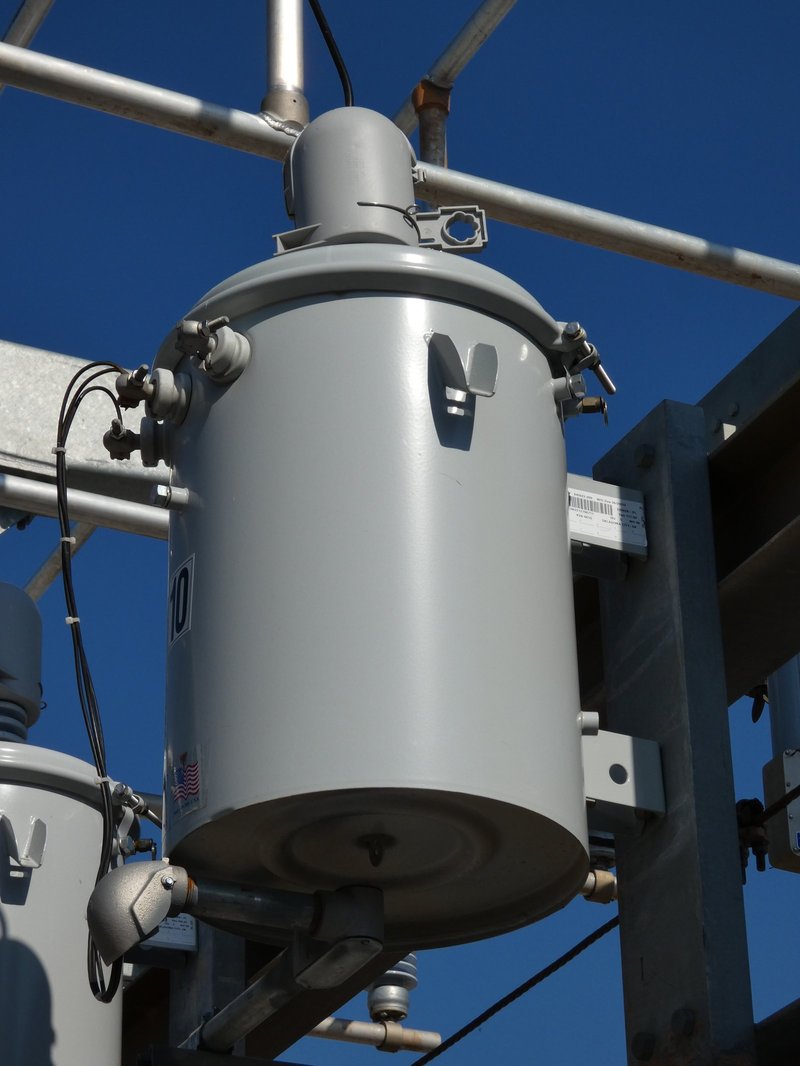
On the conventional power grid, electricity passes through at least one transformer, and usually several, between the generator and the home, factory or data center where it is used. Lately, the transformer itself has become the story. Lead times have stretched, new efficiency rules are reshaping what transformer cores are made of, and researchers are working on new core materials. This article explains what is inside a transformer, why its core material is a policy question, and what the supply situation looks like.
What is inside a transformer
A conventional transformer has two main parts: a core and a set of windings. The windings are coils of insulated copper or aluminium conductor, wound on machines built for the job (see our article on how transformer coils are wound). The core is made of electrical steel, a material chosen because it carries magnetic flux efficiently while wasting as little energy as possible.
Two core materials dominate. Grain-oriented electrical steel, usually called GOES, is the conventional choice: thin steel laminations whose crystal structure is aligned to carry flux easily. Amorphous metal is a newer alternative: a metallic glass ribbon with a disordered atomic structure, which significantly reduces the no-load losses a transformer draws simply by being energized, around the clock. The trade-offs are practical. Amorphous ribbon has lower saturation and is harder to cut and handle, while GOES is well understood and widely produced.
Efficiency rules bring the choice to a head
In the United States, the Department of Energy finalized amended efficiency standards for distribution transformers in April 2024, with compliance required from 23 April 2029. DOE's own assessment is that about 75% of the market will be able to meet the new standards with GOES, with a smaller segment using amorphous alloy. That outcome followed a long consultation: an earlier proposal would likely have pushed about 95% of the market towards amorphous metal, and manufacturers and steel suppliers argued that such a shift could not be made safely on the original timeline.
The standards remain in force, but they are under fresh review. In June 2026, DOE published a request for information on how the 2024 standards interact with domestic manufacturing capacity and supply-chain resilience. That followed an April 2026 presidential determination under the Defense Production Act that identified grid infrastructure, including transformers and electrical core steel, as essential to national defense. The comment period closed in July 2026; any change to the standards would come through further rulemaking. The rule matters beyond the US, because core material supply is global and GOES production is concentrated in a small number of mills worldwide.
Research on the next core materials
Materials research is continuing in parallel. One current example: the US Department of Energy's Office of Electricity is funding a project led by Oak Ridge National Laboratory, with Metglas Inc. and the University of North Dakota's Energy and Environmental Research Center, running from October 2025 to September 2028. The project aims to develop a low-cost amorphous and hybrid alloy, cast as a thin ribbon by planar flow casting, to reduce the size, cost and losses of distribution transformers, and to develop a domestic replacement grade of GOES for large power transformers. In the project's 2026 peer-review presentation, new amorphous ribbon had been prepared at laboratory scale, with characterization under way.
The supply picture
Demand is rising on several fronts at once: grid connections for wind and solar farms and batteries, data center construction, and replacement of ageing equipment. The same 2026 DOE presentation documented the pressure in the US market, citing the following figures:
- Lead times for transformers had increased to as much as 120 weeks.
- By 2024, the US relied on imports for 82% of its large power transformers.
- 60-80% of installed US transformers, typically designed for around 40 years of service, will reach the end of their functional life by 2050.
- Domestic supply was thin: one US GOES manufacturer, one amorphous steel manufacturer and six power transformer plants, together able to meet about 15% of national demand.
These are the US figures as documented in that presentation, not a current global market survey.
What this means for the winding industry
Every one of these trends lands eventually on the factory floor. New transformer factories need winding machines, foil winders, core cutting lines and assembly equipment. A shift in core material changes how cores are cut, stacked and handled. And higher efficiency targets push coil design towards better use of conductor and insulation. For coil winding, the transformer boom is not only about volume; it is about capability.
Figures and policy details are from US Department of Energy publications, including the June 2026 request for information and a DOE Office of Electricity peer-review presentation on the GOAST project, checked 25 November 2026; they describe the US market as documented in those sources. This article is not investment, design or purchasing advice.
Image: a 12.5 kV substation distribution transformer. Photo: Yoshieslunchbox, CC BY-SA 4.0, via Wikimedia Commons; resized from the original.